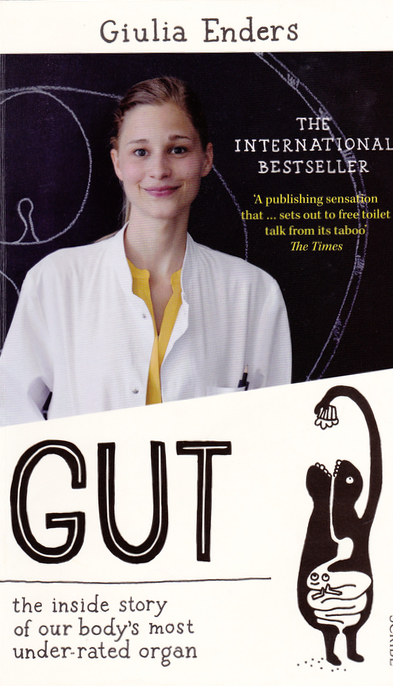
 When was the last time you read a real page-turner? I’ve been lucky enough to find a fantastic book that I just could not put down. It wasn’t a romance or a thriller, this one is about guts, poo and bacteria and it is amazing. Giulia Enders ‘GUT, the inside story of our body’s most under-rated organ’ is funny, engaging and beautifully written. Go get yourself a copy and it will change the way you eat. No time? No problem, I have mined the book for 19 of my favourite fascinating gut facts.
Warning, this article contains references to poo, burps and other stuff that may alarm you. BUT you may very well fall in love with your gut and change the way you eat.
Your small intestine is beautiful!
It’s moist, pink and with a delicate velvety sheen to it. It is odourless and up close the villi, which line the interior, look like velvet. A sort of opera coat on the inside.
Too many dinner dates?
Want to digest lunch ASAP before you leave for dinner? Again lie on your left side. Why? It’s because your stomach is asymmetrical and will empty more easily that side. This shape also allows liquids to flow down one side for absorption while the food takes a more leisurely route down the other side of the stomach. What an ace design!
Like a tardis
The surface area of your digestive system is 100 times greater than the area of your skin.
Wide as an ocean
If your gut was flattened out it would be an astonishing 7km long, to absorb all the nutrients we require, (with a bit extra spare in case some of it is out of action).
I hear thunder
An hour after eating, the clean up in the gut begins. A powerful wave of peristalsis called the ‘migrating motor complex’ rattles through your tubes to do your tidying up. So when your tummy rumbles, it’s not because you’re hungry it’s your gut doing her housework. In Biodynamic work this is the emotional ‘housecleaning’ we listen out for.
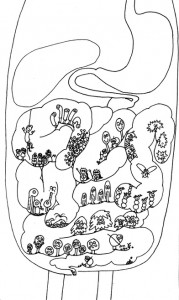 Stress bunny
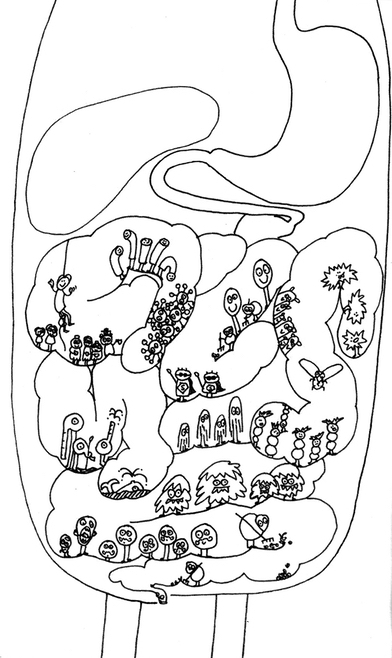
Long-term stress reduces the blood supply to the gut and thins the protective layer of mucus on the gut walls. One theory is that this allows less beneficial bacterial to flourish in the gut.
Super-gut
The huge number of nerves and massive surface area makes the gut the biggest sensory organ in the body.
More than irritable
IBS sufferers have an above incidence of anxiety and depression.
Holland and Barrett
Your appendix is made entirely of immune tissue and is the home of all the best, most helpful bacteria. Just like your very own health food store.
Slow girl
Women’s large intestines work slightly slower than men’s. This is thought to be because of your hormones.
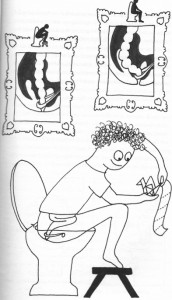 The truth about civilised sanitation
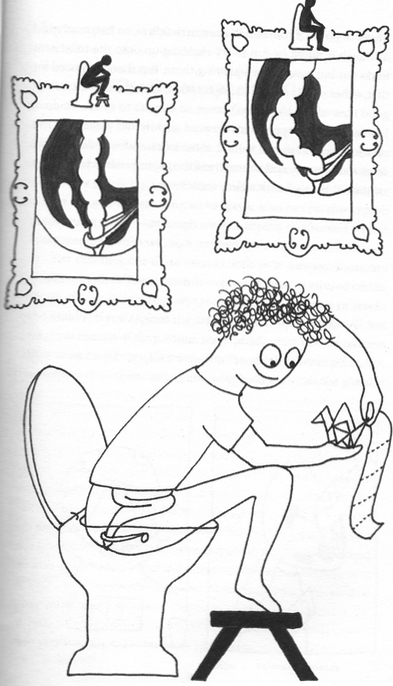
The best position to poo is squatting; this is because the colon straightens out when your knees are higher than your pelvis. Try resting your feet on a stool (boom boom!) in front of the loo while you go.
Un-trap that wind
Trapped wind hurts. It really does. If you ever felt the enormous pressure to burp, but couldn’t let it out? Lie on your left side.
Stop the Vomit comet
Here are some solutions that may work if you’re travel sick –
Look at the horizon
Reduce stress with music or other relaxation techniques
Lie on your side
Eat something containing ginger root
P6 is an acupuncture point proven to reduce nausea. You’ll find it on the inside of your wrist, 3 thumb widths from the crease, between the tendons.
Fat is good
Fat has twice as much energy per gram as carbs or protein and does amazing things in your body –
It coats the nerves so helps us to be quick thinkers
It makes hormones so keeps us more balanced
Creates cell membranes
Protects us against arteriosclerosis and Alzheimer’s and eye diseases
Of course all fats are not equal. Good fats to eat include olive oil (though not for cooking); coconut oil and clarified butter are good for that.
Poo
1g of faeces contain more bacteria than there are humans on earth!
 Bunged up? No go?

Here are some things you can do when you’re constipated…
Eat more fibre – it gives a lovely massage to the walls of the large intestine.
Psyllium seed husks and plumbs both contain agents that draw extra fluid into the gut.
This won’t work however, unless you drink enough fluids, so drink lots of water. The first sign of dehydration is having a dry nose by the way.
Face the fear! Go to the loo when you feel the need, never mind that you may have to use an unfamiliar toilet. Holding back will create more problems.
Introducing probiotic and prebiotic bacteria will help.
Flaxseeds, taken with water can help. They create a slippery lining that helps the poo to flow.
Slippery elm, taken regularly can also work for some people, though it may take a while.
Clever mice
Researchers found that mice who were given special gut-loving bacteria had fewer stress hormones, more gregarious and performed better in memory and learning tests.
Love those bacteria
Having gut-loving bacteria can positively affect a huge variety of conditions -obesity, malnutrition, nervous diseases, depression, chronic digestive problems, even Asperger’s and autism.
More gut love?
Learning to massage your belly has amazing benefits both for digestion and your emotional health. You can download your instructions right here.
The illustrations come from ‘Gut; the inside story of our body’s most under-rated organ’ and are by Jill Enders.