A hundred years ago this month, a baby girl was born into a bourgeois family in Bergen, Norway. She grew up to be the unlikely originator of the ideas behind most contemporary mind-body modalities. But because she was a woman, you won’t have heard of her or her enormous contribution to body-orientated psychotherapy or complementary therapies. You can hear more about this in my conversation with Biodynamic trainer Anat Ben-Isreal.
She was the only woman in her generation of therapists that inherited their methodology and practice from Willem Reich and while Stanley Kellerman, David Boedella (Biosynthesis) Alexander Lowen and his colleague John Pierrakos (Bioenergetics) and Ron Kurz (Hakomi) are recognised, Gerda, who created Biodynamic Psychology, is not.

In their lifetimes, all body-mind methodology was devalued, perhaps especially because of Reich’s slightly shady reputation… orgasms… yikes! But these pioneers are the parents of contemporary giants of trauma therapy Bessel van der Kolk, author of The Body Keeps the Score, and international trauma titan Gabor Mate. While the others are remembered, Gerda was consistently referred to as the ‘massage lady’ (touch being more ‘caring’ ‘female’ and thus having a lower status) and her pioneering discoveries were dismissed in her lifetime and often to be confused with Biodynamic agriculture, an entirely different and wonderful practice. She was only honoured by the European Association for Body Psychotherapy shortly before her death in 2005, despite the many Biodynamic training institutes across Europe and worldwide.
The body of work Gerda created, Biodynamic Psychology, was different to that of her contemporaries. She brought a female, cyclical sensitivity to her clients and teachings that was entirely absent previously. While her male counterparts tried to ‘break’ body armour with physical stress, she described herself as a midwife, holding space, waiting and encouraging the body to find its own way to unfold towards expression and regulation while the armouring that was ripe was encouraged to melt away.
Pre-dating the ‘new’ discoveries about fascia in the last decade, Gerda taught her students to touch and mobilise the fascia in the tissues and in the muscular-skeletal system 60 years ago to create freedom of movement and release from pain. That’s two generations before the first Fascia Research Congress in 2007.
There was a great deal of importance attached to the therapists’ relationship to their own body and the somatic resonance arising from clients’ process. Again, something that has become a widespread tool across the board in psychotherapy, somatic movement and therapeutic circles.
Way before the current understanding of the importance of rest and self-care, Gerda took a long lunch break, so she could rest after eating and massage herself, with the guidance of her peristalsis coming through her stethoscope. This was accompanied by a series of trashy novels to assist in soothing her nervous system. Students were taught that their main learning came from massaging themselves, as a route to understanding the issues in their own tissues, long before Rosita Arvigo’s self-care massage became popular in the UK.
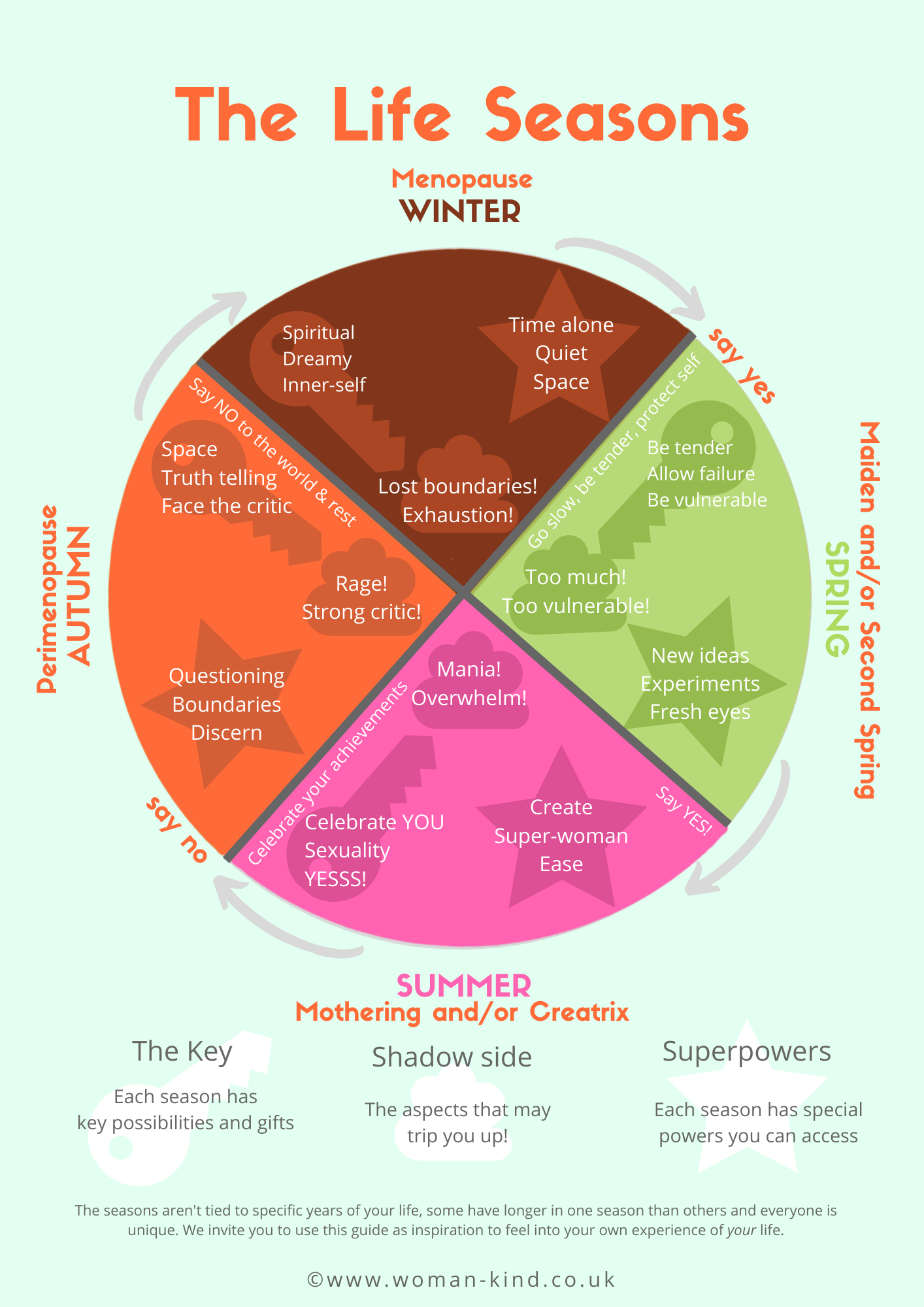
Biodynamic psychotherapy methods pre-dated Polyvagal theory too, with the emphasis of unconditional regard creating a safe place for clients and the strong emphasis on the rest and digest part of the nervous system being present to allow for healing. Crossing themes with my current line of work, menstrual cycle awareness, Gerda developed the cycle of activity and recovery, known as the ‘Vasomotoric’ cycle, which mirrors the inner seasons.

Her most extraordinary discovery though, was the way the gut operated as an emotional processor. Gerda used a stethoscope to listen to the peristalsis from her clients’ guts, as an indicator of the body’s ability to down-regulate the nervous system by digesting emotional stress and observed this a thousand times accompanying an insight or release. These methods dismissed as eccentric at the time, are now looking increasingly credible with new research and understanding about the vagus nerve.
Biodynamic is a generous, spiritual modality, holding that all humans have the capacity for healing and well-being. She inspired absolute trust in the wisdom of the body and its energy to find its own way. It’s a client centred and client lead approach, that was established right at the beginning of the client centred, humanistic psychotherapy movement. This trust in energy and our essential ‘goodness’ is now a common-held, unremarkable tenet from trauma therapy, somatic practices, yoga, through meditation and beyond, yet it was a radical shift at the time before interoception was a thing.
Perhaps even more revolutionary was her emphasis on pleasure in the body. Pleasure that is not only accessible to highly skilled practitioners, but pleasure that we can all experience, that connects us to our spirituality, to our own healing. Pleasure, in protestant cultures, is ungovernable, unmeasurable, and absolutely not reliant on hierarchies and structure. Worse than that, it is female.
I have had a long and complicated relationship with Biodynamic Psychotherapy, my training was disrupted and chaotic, and it’s taken until now, some 30 years after I started, to be able to see how deeply influenced my current work is by Gerda’s discoveries and teaching and how much I have benefitted. I am once again, deeply immersed in the cyclical, the quiet, the energy and the wisdom of the body, none of which is fashionable in our ‘fix it or stop whinging’ world.
Why is Biodynamic Psychotherapy still largely unknown? Why is Gerda’s work not recognised in the UK? Partly it was to do with timing, she arrived in London in 1968 just as the counter culture was cresting, perfect for a permissive, cutting edge practice. The Biodynamic centres gathered pace through the 1970’s but it was, like the rest of the population ‘Thatcher wot did for her’. Or rather the shift in cultural emphasis on doing and money over essence and quality of being. Then, she was a woman, and her work was cyclical, subtle and gentle so obviously not worthy of note in those deeply misogynistic times. She wrote about breastfeeding and mothering too, at a time when pregnancy, menstruation and menopause were entirely absent from the curriculum; such domestic, female concerns were dismissed by her colleagues. In her book Between Psyche and Soma, finally published in English, time and again she speaks of how she tried to talk with the leading people in the fields and was dismissed. Also in the mix, was language, though she spoke Norwegian, German and French her written English is difficult and muddled, with lots of names given to processes that seem designed to aggrandize her work rather than explain it. Also there was the lipstick, always red, the earrings always chandeliers, and the kaftans: the sheer, life-affirming joy of her, which told against her in the male-dominated, competitive world of psychotherapy.

Next time you’re asked to ‘let your body move’, or ‘notice your energy’, or ‘be kind to yourself ‘, ‘use self-touch’, ‘ let go of expectations ‘ or ‘rest when your body needs it’ remember that back in the day, it was a girl from Bergen who initiated these ideas, and having a huge therapeutic gift, resilience and trust in her methods, spread her knowledge across the globe, influencing subsequent generations of body-based therapists after her. Her name was Gerda.
You can see some of the ongoing centennial celebrations here.
The London School of Biodynamic Psychotherapy
Cambridge School of Body Psychotherapy
Biodynamic Massage Association
The Institute of Biodynamic Medicine
If you are a Biodynamic therapist you are warmly welcomed to contribute to the Biodynamic Stories audio project. The intention is to bring together different memories of Gerda, and experiences of the Biodynamic method in our different voices, ages and cultures by answering three questions:
- Your name
- When and where you trained
- A memory of Gerda or the aspect of the Biodynamic method that is most important to you
You can book your slot record on this link or feel free to get in touch if you have questions.