Winter is a time when we are naturally slower, we crave more quiet, more nourishing food, more alone time. And then there’s Christmas smack in the middle. Christmas demands you do more tasks in a shorter day, listen to Slade on repeat, drink more booze and socialise 24/7. All this when we’re already exhausted so is it any wonder we struggle? Chinese Medicine which has a 2000 year track record in prioritising being well instead of fixing illness, recommends warm food instead of raw, nourishing bone broth, pulses, root vegetables, keep warm, especially the lower back and feet, and to rest, rest, REST in other words: be more like the mammal you are and hibernate.
In addition to the endless physical and emotional labour, the season will naturally bring with it the imprint of past years, the expectations, losses, the issues of belonging or not belonging to your birth or chosen family. All of which tends to be self-medicated through the darkest days, but luckily there is a seemingly endless supply of sugar and alcohol and full permission to start medicating at breakfast. Hooray! What could possibly go wrong?
Enquiry
Time out, away from the noise is essential but hard to come by. If you find it difficult to get enough of your preferred style of rest into your days, you may find these enquiries helpful:
- What did you learn from your mum about rest?
- What would you like to model for the next generation?
Gendered exhaustion
The world is still highly dependent on unpaid gendered labour, yes, STILL, I know right?! Women and those brought up as girls still do more emotional and physical labour. In fact we are at the part of the year where the disparity in the gender pay gap means that from now on until the end of December, women are effectively working for free. In fact, if you are in the UK, the gender pay gap has actually increased from 10.7% to 11.3% according to the Fawcett Society.
Often women report they are made to feel disproportionately responsible for the happiness of the rest of their household and close community and put their own needs last. For example at Christmas, women buy more gifts: in two thirds of UK households women are responsible for buying all the gifts, let’s hope they ended up within budget and everybody appreciated them. On the physical side, women spend 40% more time than cis men on unpaid work still. Add to this the unrealistic expectations of festive perfection fostered by magazines and social media and it becomes clear:
You cannot win at Christmas
How to change the balance of labour in your home
- Let go of your expectations, accept that other people have their own story about how you are meeting their needs or not.
- Say no – delegate, share, do less, let yourself off the hook!
To have the resources to rise in Spring, face the stressors head-on and resource yourself with rest.
So what is rest?
It doesn’t have to be earned for starters, nor is it doled out as a reward and it can take many different forms: taking a nap, gazing at the moon, colouring, or dancing can all be restful in their own way. Let’s have a look at the different ways rest might be available to you even in the thick of the festive season, based loosely on the ideas of Nicola Jane Hobbs
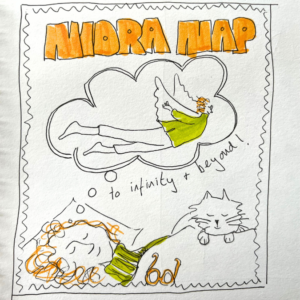
Physical rest – sleep, nidra, stretching, nourishing food
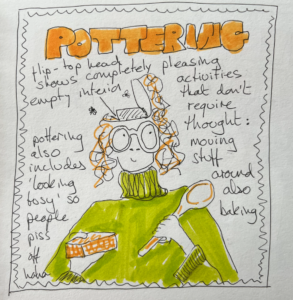
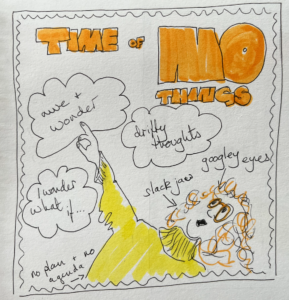
Mental rest – non-thinking activity, baking, weeding, sweeping
Emotional rest – crying, journaling, sharing with a safe friend
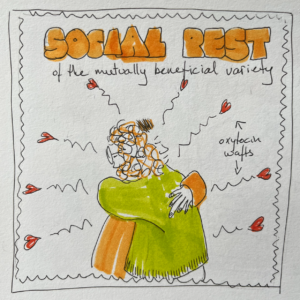
Social rest – hugs, alone time, intimacy,
Sensory rest – silence, relaxing music, no strong smells
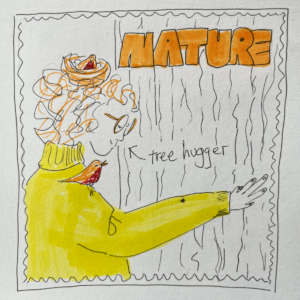
Spiritual rest – meditation, prayer, poetry, nature
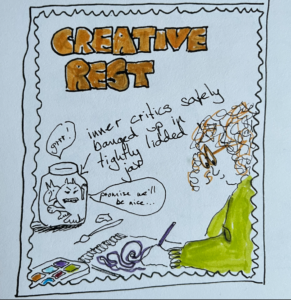
Creative rest – drawing, arranging objects, crafting
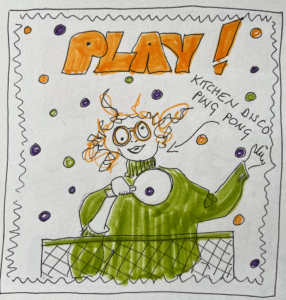
Playful rest – funny movie, puzzles,
Evening or morning after practice
At the end of the day or in the morning ponder:
- What kind of stress have I been experiencing?
- How can I rest in the next 24 hours to care for myself?
- How did I care for myself today?
Using these enquiries you can start to rest smarter in response to your lives life. For example if you’ve been in a loud, overstimulating environment – plan in quiet, dim lights softness. If you’ve been working the planning lists – add in some playtime, a funny movie or games. If you have been holding emotional space for others – seek some alone time, maybe in nature, or a hug or talk it through with a friend.
And write it down – we tend to notice where we fail, the constant lack, ‘I should… meditate, go vegan etc’. By writing down how you are caring for yourself, however small it is, you are developing your repertoire of care for yourself, growing your self-esteem, acting on your sense of worth and building your resources. The Perimenopause Journal is an excellent place to do this and can help to re-wire your brain to be more resilient and better resourced.
Make it non-negotiable
Look at what rest practices you can put in or add to in your life that are non-negotiable
And what might be added in response to what’s going on
The Winter season of Yoga Nidra starts on Thursday 19th December, you can book that here
Resources
The Perimenopause Journal makes an excellent place to develop more kindness for yourself or a friend
Wintering: The Power of Rest and Retreat in Difficult Times – Katherine May’s excellent book
Self-care for winter – Susie Reading’s latest guide to wellbeing
Wintering in the face of Tinsel: a guide for sensitive folk to survive Christmas with ChaNan Bonser
Free Resource Library of Yoga Nidra
Stressed and Overwhelmed excellent article by Brenee Brown
Cyclical Living Unwrapped Un-Christmas Special – podcast with Kate and Leora Leboff