For the sixth year running I am delighted to share my round-up and reviews of all the books I read this year. As you’ll see from the previous years, my addiction is worsening, largely fuelled by my local library – shout out to the kind and patient folk at Bushey library – and to the wonder that is Borrowbox. If you’ve not encountered this, it’s the ebook library, free-to access with a library membership.
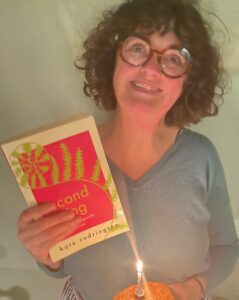
My most read book this year is conspicuous by its absence: The Perimenopause Journal was read a gazzilion times because of, well, writing and editing it. Not available in libraries obviously, but you can go request Second Spring and borrow it. No scribbling on pages though. For Dutch speakers, you can likely find Second Spring in translation, Tweede Lente in your local library or indy bookshop.
The Story of Art Without Men – Katy Hessel
This does exactly what is says on the tin. It progresses from the Renaissance, through successive art movements all the way to the present day showcasing brilliant artists and their stories, and all of them are women. It could easily have become a furious diatribe but Katy’s bright enthusiasm wins the day and you can feel her joy and delight shimmering on every page. It’s heavy, with more than 460 page, has excellent images of the work, and dense; there’s so much information and stimulation I could only take a little at a time. But I learned a huge amount and it’s opened doors to new artists and new creations too.
Demon Copperhead – Barbara Kingsolver
This book arrived just when I needed it. Chatting on socials after I published my 2023 list, more than one person recommended it and then like magic, it fetched up on my doorstep. A generous loan from a neighbour because that’s the kind of person who lives around here. Half way down the first page I knew I was in good hands. Then the next two chapters I tried to work out how the hell she wrote like a dream. Then I was lost in the story for the next 500 pages. Structure and theme set by Dickens’ David Copperfield, the story is set in the poor Appalachian mountains, riddled with poverty and addiction to oxytocin. We live with two generations of lost children screwed by the state, through the life of Demon Copperhead. Stuffed with delicious characters, a hymn to the beauty and resilience of the land, it teaches us to look unflinchingly at the horror and destruction that follows poverty, how greed created the mess in the first place, and the kindness of humans that lifts us out of it. A must-read.
Because I Don’t Know Whst You Mean And Whst You Don’t-Josie Long
I borrowed this from the library because at low times in mid-January, Demon Copperhead was just too grim for bedtime reading. I love Josie Ling’s standup and her radio show Short Cuts, her soft curiosity with occasional barb. But this collection of short stories was the opposite way round, a lot of barbs with occasional softness. The complicated characters seem to hover on the margins, caught at a hair’s breadth away from falling into darkness. Much more mature, complex and vibrant writing than the usual potboiler you get from a comedian turned author.
The Good Liars by Anita Frank
Page turner of a mystery novel set between the wars. Entitlement, loyalty, mental and physical scarring, lust and longing unfold the truth to the last page.
Body Work the radical power of personal narrative- Melissa Febos
If the title ‘Body Work’ hadn’t sold it to me, the blue and yellow Matisse cut out cover would have done all by itself. As someone who loathes sharing personal stories in my work, I wanted some support. As a writing manual I loved this, it invoked a companionship in the usually grim task of getting words to behave nicely on the page. Melissa felt like an encouraging mentor and has renewed my enthusiasm for words as an integration tool. Not sure I’d ever want it read by others though.
Reckoning- V formerly Eve Ensler
Last autumn I surprised myself by crying real tears when standing in the queue to get this book signed by V. The main feeling was overwhelming gratitude for her passionate contribution to raising the visibility of the violence women face day in day out. Reckoning is a compilation of articles and essays from the last decade, and would be a potboiler from anyone else, but is a beacon of inspiration from her. Just don’t ask to borrow my copy, you can’t have it.
Timecode of a Face – Ruth Ozeki
Zen priest, writer and filmmaker, Ruth stares into her face for three hours and ponders on racism, ancestry, impermanence, her parents, death and ageism. More of an essay than a book she includes detours around Noh masks and movies, vulnerability and cosmetic surgery, inviting us to love ourselves more while we have the chance.
Sea Bean – Sally Huband
A memoir/natural history/feminist/folklore combo based on Shetland. What’s not to love? A sea bean is the seed of a tropical vine that has found its way from the Caribbean across the Atlantic, a journey that might take decades. Used as a charm, or talisman in the past, Sally weaves her beachcombing searches for these increasingly rare finds into her narrative around health and life.
The Book Of Delights – Ross Gay
Each day, more less, Ross writes about something that has delighted him. You can forget any fears of trite self-help though, Ross’s delights are a complex mix, embracing racism, loss, the disappearance of the natural world, a stranger caught in peripheral vision. Everyday delights.
How To Live With The End In Mind, Dying, Death, and Wisdom in an Age Of Denial – Kathryn Mannix
Palliative care expert and activist Kathryn is on a mission to gently move aside the fear we have about death. Through semi-fictional stories of people at the end of life, and their different families Kathryn shows how it’s possible to end life with dignity. I think everyone should read this.
Grace And Chaos: A Short Book About Group Facilitation – Nick Totton
Digestible outline of the forces operating in wild organism that is a psychotherapy group. The principles are applicable to any kind of group; work colleagues, schools etc. Deeply reassuring when things are getting messy, which Nick reassures us is the group reorganising itself towards deeper cohesion.
How To Be A Bad Therapist – Allison Priestman and Nick Totton
One of my favourite quotes ever, ‘Relax: everything is out of control’ (also appears in Second Spring) perfectly explains the joy and terror of working with clients. The more we try to manage the process, the more we get in the way of the healing that is wanting to happen. A quick read that beautifully unpacks the rigidity and fear that keeps clients stuck and therapists burnt out.
Unsheltered – Barbara Kingsolver
Split between 21st and 19th centuries, we discover families living in the same house in Vineland, New Jersey. The house, thrown together by the prospector who built the town, is falling apart right from the beginning. Brimming with life and enduring issues of gender-based discrimination, the disappearing natural world, education, the rise of the right wing, we see how bleak America has become.
The Maiden – Kate Foster
Cracking page turner offering a feminist telling of a historical event. Set in 1670’s Edinburgh the fate of two women unfolds, one poor, the other from a noble family trying to maintain status. Both of them are at the mercy of a patriarchal society. Great holiday reading I hobbled it up in 36 hours.
The Leader’s Second Training – Arnold Mindell
I first came across Mindell’s Process Work all the way back in the 80’s and now return to it with even deeper admiration. Like an other worldly Pixie, he shows how relaxing and paying attention to the subtle images, movements, sensations and thoughts, offer answers to the most intractable conflicts. Loads of practical stuff to play with but the prize moment is his telling of how loosing the plot while facilitating Northern Irish politicians actually saved the day.
Just Kids – Patti Smith
Patti is a huge role model for me: self-effacing, shining in a male-dominated arena, true to her artistic vision, deliciously geeky. I’m a fan girl so don’t expect any objectivity here. In this bio she follows her relationship with artist Robert Mapplethorp from when they first met aged 17, to his death aged 34. Fascinating to see how Mapplethorp’s drive for fame and Smith’s less focused explorations lead them both to visibility, and how their respect for each others’ process endured.
Hello Beautiful – Ann Napolitano
Multi-award winning re-working of Little Women set in Chicago 1960-1984. We are pulled into the interior of the lives of four sisters, following the push-pull of alliances, betrayal and acceptance over their lives. Characters so believable you could feel their touch on your skin, behaving in the irrational, surprising, wonderful way that humans do. Great read.
Sisters Of Sword And Shadow -Laura Bates
A ripping feminist Camelot tale in which our Shero, Cass, makes a dramatic departure from her small life to discover her destiny. Teen lit, which I don’t often read, so every chapter dripping with excitement, action or potential jeopardy left me wrung out and sleepless. Yes I’m a lightweight, but I’m still looking forward to book two. Love that Laura Bates has diverted from the serious business of dismantling patriarchy, to telling the story of how is was defeated through myth.
I Am, I Am, I Am: Seventeen Brushes With Death – Maggie O’Farrell
First off: do not read this at night! The UK’s greatest living fiction writer turned to memoir in 2017 and described the ways she has had bridges with death. Rash teen acts, planes, assault, childbirth and more have a lens placed on them to show the unique humanness of each moment in time. Digesting Maggie’s experiences inevitably brings up my own close shaves and gratitude for being alive. I didn’t think it was possible to love her more, but I do.
Thin places – Kerri ni Dochartaigh
Thin Places are those special places where time bends, knowing is available and possibilities whisper to us. In a way Kerri’s whole book is an extended thin place of poetic narration. A memoir/natural history hybrid, my favourite genre, we journey through her impoverished childhood in Derry, in a mixed family, at the time of the troubles, and how the violence touched her life. I’ve read lots about trauma and trauma recovery, but this book narrates it from the inside. It’s a hard read for sure; gritty but absolutely affirming that life is possible. Reading this back, it doesn’t do the book justice, it is so much bigger. Probably a mystical marmite read, full of fog and desperation, but I loved it.
Sitting in the Fire – Arnold Mindell
A classic, perhaps THE classic from the master of Process Work. It mostly concerns facilitating conflict in groups, using the many gatherings he and Amy Mindell held for warring communities as illustration. (Full props to him for crediting Amy for much of the process techniques, unlike many men of his era). A must for all facilitators.
Cycle Holding – Julia Davis and Tessa Venuti Sanderson
Julia and Tessa take us gently by the hand and invite us to dive into the possibilities for connection and healing that are calling us to hold space for our communities. Deeply practical, it offers step-by-step guidance on everything we need to consider; who to invite, inclusion, venues and online meetings, preparing the space, marketing, support and money are all laid out. An absolute gem, I wish this book had existed before I held circles it would have saved me heaps of time, energy and heartache. (Gifted copy)
Rebel Girl: my life as a feminist punk Kathleen Hanna
I have no idea what I was listening to In the early 90’s, but it wasn’t Nirvana or Bikini Kill. I dimly remember watching Come As You Are on TOTP and dismissing it as a Killing Joke pastiche. So coming to this music now is a revelation, the joy, the rage, the grlzzz. I saw Bikini Kill this June in London and cried happy/sad tears. Their postmenopausal selves singing songs written in innocence, and inspiring another generation was electrifying. Kathleen Hanna’s biography has a similar bittersweet vibe; we witness her trauma, it’s devastating effect on her life, and her gradual recovery. Great read for music fans and feminists.
Learning To Swim – Sara J Henry
This saw me through a three hour delay on a train. Perfectly suspenseful, i .e. not too too exciting but just scary enough, it opens with our outsider Shero dives off a ferry to save a child and the consequences of her actions unfold. Set across the Canadian/American border, we have fun with cultural and language differences, relationships and yes, the effect of trauma in childhood and beyond. I swear this trauma theme is unconsciously chosen, let’s see how it pops up in my next read?!
Eve: How The Female Body Drove 200 Million Years Of Human Evolution – Cat Bohannon
Prepare to have your mind blown by the vast scope of this extraordinary epic. Divided by chapter into physical aspects of femaleness: milk, womb, brain etc paleoanthropologist Cat dives into the research data on the original Eve’s that drove evolution on a dizzying timeline from little squirrels from the Jurassic era, to the comparatively recent homo erectus only 8,500 yrs ago. Fascinating to view female experience from a survival of the species, instead of the ‘personal’ viewpoint, it had my mouth hanging open at every page. She shows empirically how access to gynaecological treatment and education makes for a better society for all. On the repeating trauma theme, there is a link in this book. It’s the trauma that drives evolution obvs.
Yellowface – R F Kuang
Adored this thrillingly dark dive into the tangled world of publishing, who gets to tell the story, and who profits from the telling. Loved the viciousness of the jealousy, the obsession with social media primacy, the ever present fear of being cancelled and the blind hypocrisy of the main character. It rips the shit out of it all.
The Vanishing Act Of Esme Lennox – Maggie O’Farrell
In which we follow the story of what was done to women who transgressed social norms in 20th C Britain and the resulting trauma that flows through generations afterwards. I must be running out of Maggie O’Farrell novels soon, so I was pleased to find this for beach reading.
Mrs Dalloway – Virginia Woolf
After a near-ecstatic visit to Charleston last month, I wanted to revisit Mrs Dalloway. Sian Thomas kindly read it to me via BBC Sounds and I listened on the train. It was a struggle to stay with the upper class snobbery of postwar London: hats, the awful party, would the prime minister be there… but interesting that the rich stream of consciousness Virginia uses, now normal for fiction, was once revolutionary. Fave quote: ‘it looked as though her body, of its own accord, had put forth a green frill’.
Dear Edward – Ann Napolitano
We know right from the beginning that there’s a crash and only one survivor, Edward, the only soul left of his family. What unfolds alternating chapter by chapter, is the how Edward moves towards recovery over years, and the hours before the plane crash. Like Hello Beautiful, it’s beautifully narrated, in cool, unsentimental prose so we can relax into the characters lives and Edward’s pain with confidence that we’ll be able to read to the end without the tears engulfing us.
Dreamwork Alone – Arnold Mindell
I am such fan. In case you’ve not encountered him before, he is a scientist turned psychologist whose pioneering work with personal process blossomed into anti racism, anti sexism and eco therapy in the 1970’s. This book does what it says on the tin, but what makes it special is the ‘straight from the heart’ way he wrote it, apparently straight from a meditative state. Other of his books are academic, scientific or polemic but this one has a sweetness all of its own.
Raising Sparks – Ariel Kahn
Charming magical realism-ish novel set in contemporary Middle East. Our Shero Malkakorpi escapes her traditional family in Jerusalem, and via an abusive guru, sexual awakening and special powers, comes to find herself. There are many aspects that are difficult to believe in through the story, but there’s one aspect that shines through. Food. Food prep, shopping, food as love, belonging, memory, craft, joy and creativity. Worth reading for the synethsesic extravaganza of the food alone.
The Opposite of a Person – Lieke Marsman and translated by Sophie Collins
I am not clever enough for this book, a meditation on loneliness and climate change written by the Poet Laureate of the Netherlands. It has some startlingly good lines: ‘Under every lover lies the empty bed.’ Is my fave. But I had to wait until the translator’s note to understand what the jumping between narrative, quotes and poetry was all about. Heavy on philosophy, the perils of human-centredness, language and consciousness. Light on laughs and page turning.
How To Be A Craftivist: The art of gentle protest – Sarah P Corbett
I’d been slightly aware of Craftivism but this book opened my eyes to the possibility of making activism truly sustainable for introverts. Sarah gives directions for thinking through deeply strategic campaigns, that bring compassion and emotional intelligence to making change. It makes clear that compassion is the way forward, especially when it’s so easy to judge those with power, and to jump on a bandwagon of outrage that has no invitation to explore or take positive action. Enlightening. Watch this space for some more stitchery.
Metabolism Repair For Women- Lara Briden
I have been waiting for this for so long as Lara’s books on menstrual and perimenopause health have been a constant reference for myself and my clients. It does not disappoint. Lara has created the first intelligent, compassionate, comprehensive book on weight loss and metabolism I have ever found. All science backed. Highly recommend you buy it or borrow from your local library. Bloody priceless.
Mr N – Najwa Barakat – translated by Luke Leafgren
Not a good read if you’re vulnerable as it’s filled with violence and suicide. Our unreliable narrator, Mr N, navigates contemporary Beirut staggering between reality and characters from the fiction he writes. We’re sucked into his interior experience of personal trauma, the city traumatised by war and poverty and the violence that ensues, all vividly described. Tough.
Giovanni’s Room – James Baldwin
I’m not sure if this qualifies for an entry because:
A. This was an abridged audio version of Giovanni’s Room, and
B. I was in and out of sleep because it was at night.
But the bits where I was awake , really woke me up. I first (and last) read Baldwin in my 20’s and the cadence of the sentences was still deeply familiar. There’s something about it that taught me what good writing was and also how to love; listening in I had a visceral remembering of how it felt to be young and all that yearning. It could be responsible for decades of searching for passion in the wrong places.
More Than A Woman – Caitlyn Moran
Published when I was writing Second Spring, I couldn’t read this until a decent time had passed because I feared I would melt into a soup of writerly inadequacy. Reading it now, what strikes me most is how much has shifted since 2011 when How To Be A Woman was published. Feminism went mainstream post #metoo. Perimenopause is everywhere. Menstrual product ads use red fluid, plus a million other positive shifts. My favourite bits were how she navigated her daughter’s decline and recovery from a mental health crisis which stood out from the regular, hilarious Moran magic, with its crisp precision and stillness. Glad to say, in case you’re bothered, my writerly self is more robust four years on.
The Teacher – Tim Sullivan
Loved this detective story, which includes many strands that sympathetically explore various themes. Most prominent is the inside view of autistic experience in our hero DS Cross. Also excellent on sexual assault and harassment in the police service, and the connection between casual sexism and violent assault. The teacher in the title is the victim of murder, and the investigation gives space to unpack the effect of violence in schools and the effect of this trauma on later life.
What About The Men – Caitlyn Moran
Well, she went there, and I am so glad she did. Full confession, I’m not that interested in men. I like my partner and son well enough, I love them too, but beyond that, I don’t have the bandwidth. So it was probably good for me to give some attention to wtf is going on with ‘team testicles’ as CM calls them, and why they come off so badly in education, mental health, addictions, suicide, jail, and yes, toxicity. It’s stuffed full of laughs, great research, heart-busting stories and the love of men.
Asa: The Girl Who Turned Into A Pair of Chopsticks – Natsuko Imamura
Three short stories: Asa offers her friend a snack, Nami is weirdly unscathed in an acorn fight, and Happy just wants you to lie down. Each story takes a circuitous route into complete weirdness. Highly unsettling.
The Cyclist – Tim Sullivan
Returning to DS Cross for more autistic deductions, but though still charmed, the tropes and explanations of his behaviour and method felt too heavy handed second time round.
Hope in the Dark – Rebecca Solnit
Written in 2004 when the worst possible threat was Bush, RS’s clarity and brilliance still shine post pandemic and Trump. Activism as process that continues over great swathes of time, and having unknowable consequences. This is one of the many chunks that brought me to tears:
‘Hope just means another world might be possible, not promised, not guaranteed. Hope calls for action; action is impossible without hope. To hope is to give yourself to the future,, and that commitment to the future makes the present inhabitable.’
Intermezzo – Sally Rooney
A book where little enough happens and all the people are moderately sad for 400 pages. Probably the antithesis of Marvel, the book is bursting with interior life. It took me a few 100 pages to relax into her intimate, unconventional narrative style. Once I did I found the mostly interior dialogue beautifully described the humanness of holding all the things. It’s about a sibling relationship, both grieving their father in different ways. Complex, grey, rainy, real.
All Fours – Miranda July
THE best fiction with a perimenopausal heroine I’ve ever encountered. Read this. Just do.
Miss Benson’s Beetle- Rachel Joyce
If you took Lessons in Chemistry, emptied out the romance and added in female friendship and beetles, you’d arrive at Miss Benson’s Beetle. A joyous girls adventure, we start from the trauma of a repressed middle class family devastated by WW1, and conclude in an extraordinary adventure in the mountains of a pacific island. Well-loved by many, according to the gazillion Amazon reviews, it’ll get you through the toughest time with its pathos, wit and the unfolding of this unlikely friendship.
Wise Women: Myths and stories for midlife and beyond – Sharon Blackie
Like a cool drink on a hot day, Sharon’s collection of powerful old women from folklore will revive you from the sweat of ageism and misogyny. These Sheros aren’t sitting around combing their hair, they’re tricky, testing, wise, magical. They guard the sacred places, protect the land and mete out justice. Having waited so long for this, I thought I was going to romp through it greedily, but the potency of these stories demanded time for integration and my own dreaming. Perfect for weaving your second cycle into existence.
A Thousand Threads – Neneh Cherry
In my teens and twenties I SO wanted to have Neneh’s life. She sang in the Slits when she was 14, the SLITS! The coolest girl band in the world. Was in chaotic improv jazz marvel, Rip Rig & Panic making a glorious racket. She went to all the clubs I longed to go to, featured in the magazines I read. Then took her huge, glorious presence into the mainstream with hip hop inspired pop, when she was pregnant. On Top of the Pops. This rampant creativity born from her artist parents and a free-wheeling upbringing had repercussions in addiction later in life. But in recovery now she’s risen gloriously once again, with a new album.
Giving Up The Ghost- Hilary Mantel
Possibly my favourite book this year, Hilary’s memoir is as sharp as a knife and as arch and knowing as they come. The first, pre-puberty half boggles she describes herself as having emerged from the womb a fully sentient adult and utterly dismayed by the idiocy of the world and the people around her. With apparently precise recall she is plagued by spirits , ghosts and entities. The second half is heartbreaking, in which she describes the years of pain from endometriosis, misdiagnosis, toxic medication and resultant poisoning and brutal surgery . To have survived at all seems astonishing, but to have come out and perused her craft, a bloodied triumph. What a Shero.
The White Woman on the Green Bicycle – Monique Roffey
A five decade history of a love affair and colonialism. White couple George and Sabine (the cyclist) arrive in 1950’s Trinidad from a bleak rationed UK and over time there’s a third person in the relationship, the island itself. The book is in two halves so that we first follow the closing part of the marriage, before we understand how they arrived there. I’m not sure if the description of politics is accurate but I found the emergence of black power and waves of post-colonial rebellion riveting. Good read but nowhere near the sparkling Mermaid of Black Conch.
Freshwater – Emezi Alwaeke
I don’t recall reading anything like this before. It’s the story of Ada, a young Nigerian woman from girlhood to her 20’s who is inhabited by spirits. Written mostly from the point of view of the various inhabitants, the little Gods, who have the best of fun they can in a human body. Following an assault on her arrival at college in America, Ada checks out entirely and splinters apart. Highly creative, beautifully written and amazingly, Emezi’s first novel. I can’t wait to read her next one.
A Single Thread – Tracey Chevalier
I have a particular fondness for inter-war novels about white middle class women coming alive (no surprise there!) and this, from the author of Girl With The Pearl Earring, paints a finely balanced portrait of the restraints that women in the 1930’s lived with. Interesting counterpoint to read this straight after Freshwater, to see how 80 years of feminism has transformed our lives. Both survivors of sexual assault, in A Single Thread Violet comes alive and free, while Ada is subsumed and fades.
I’m already stuck into the excellent Goddess Of A Thousand Faces by Jasmin Elmer and The Memoir of Lucien Freud by Rose Boyt but you’ll have to wait 12 months to see what I thought about those. Keep reading my lovelies and please don’t underestimate the power of leaving reviews and recommending your favourite reads on socials and in person. Each small recommendation literally feeds a writer.